
Public Reports:
Canada Transit
Through our partnership with Transport Canada, we provide free public access to a limited set of rail traffic data from the Canadian rail network.
Weekly Transit Data
The dataset linked in the buttons below is a summary of rail traffic detected by RailState’s national network of AI-backed sensors, as reported in Eastern Time. It shows a rolling 53 weeks of data from the most recent reporting period, reported once weekly, including:
- Train Count: For train types broken down by Bulk, Intermodal, Manifest & Automotive, Other.
- Speed: Average Speed and Standard Deviation Speed in miles per hour.
- Region: Movements between two connecting regions (this is not an indication of the movement’s ultimate origin or destination on the rail network).
- Cross-Border: Movements between points in Canada to/from the United States.
This public view does not include every rail line or route option between regions and does not contain any information specifying a single railway. See the definitions tab in the XLSX download for additional details about the dataset.
Download the Dataset:
Latest Insights
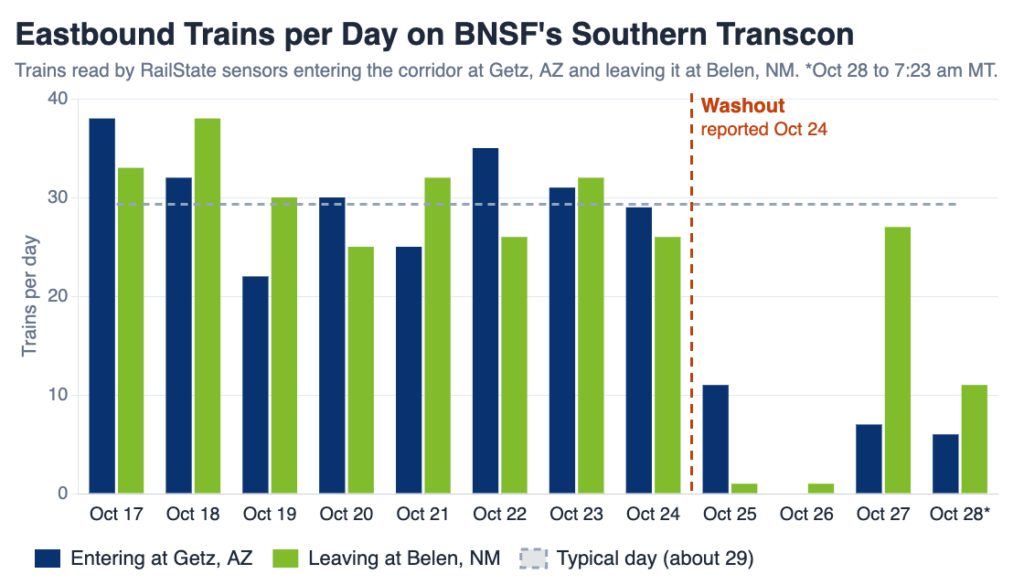
After Historic Flooding BNSF Had Trains Moving in Two Days
RailState sensors measured BNSF's Transcon washout near Laguna, NM: trains moving again in 61 hours, then clearing at 1.2 times the normal pace.
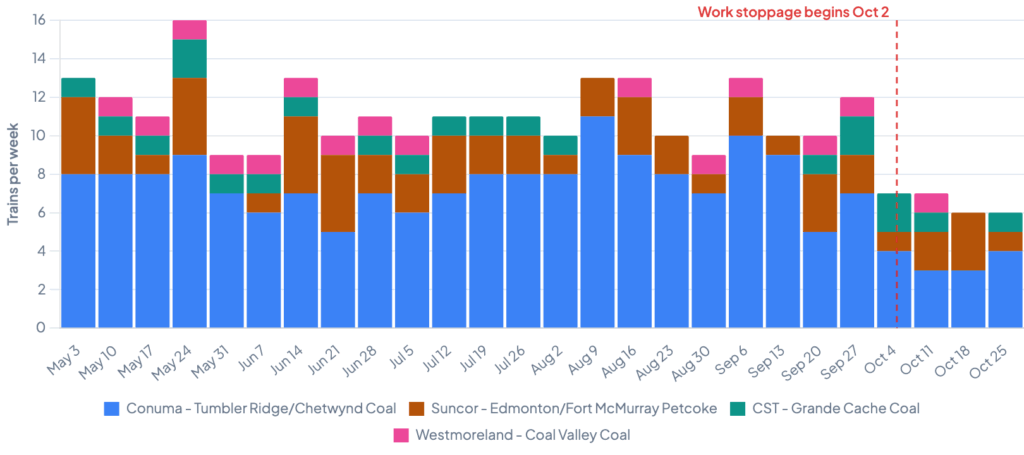
A Labour Dispute at Prince Rupert Is Rerouting Western Canada’s Coal
RailState sensor data shows coal trains into Trigon at Prince Rupert fell 48% in the work stoppage, as Conuma and Westmoreland sent trains to Westshore.
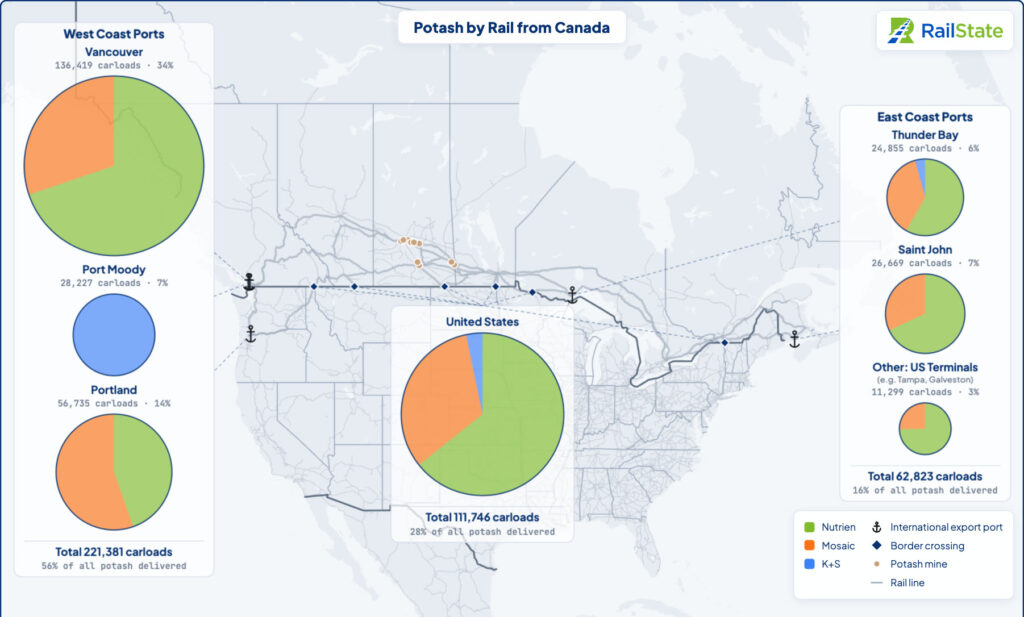
Potash Is in the Headlines. Here Is Where It Actually Goes.
Canada supplies most of North America's potash and nearly all of it moves by rail. RailState's trackside cameras show where it goes, weeks ahead of official data.
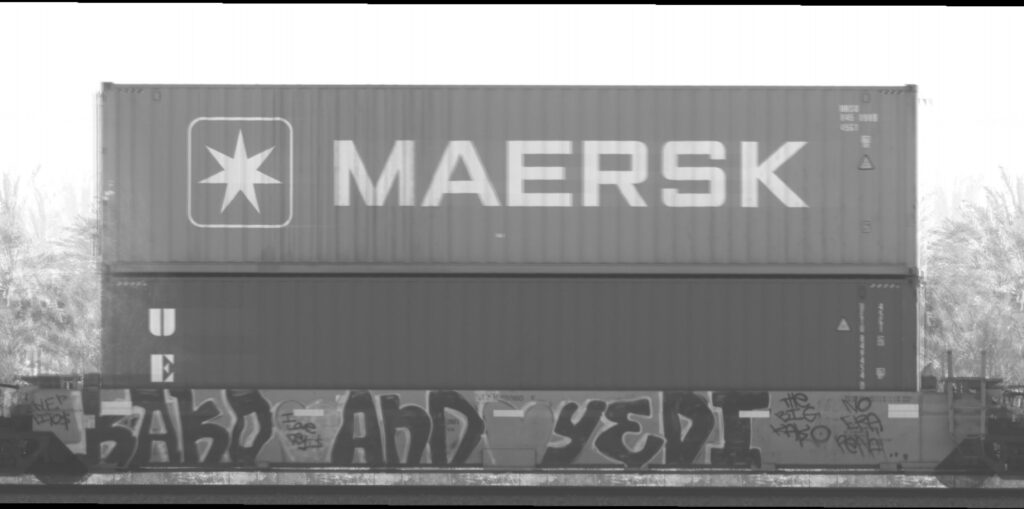
Maersk Moves to UP
Maersk just moved most of its eastbound SoCal freight from BNSF to Union Pacific's Sunset Route — a sudden flip no public report has caught.
A Tale of Two Corridors
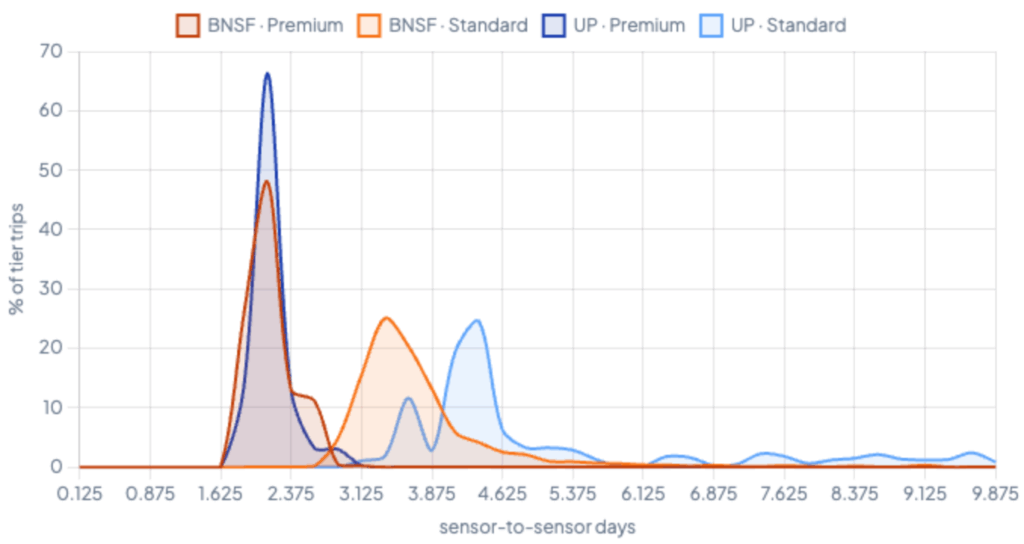
We followed hundreds of thousands of containers across two 2,000-mile rail corridors — Vancouver→Toronto and LA→Chicago. The performance gap between railroads shows up in days, not hours, and appears in no published schedule. See what the data reveals.
How Bad is the Rail Bottleneck in Chicago?
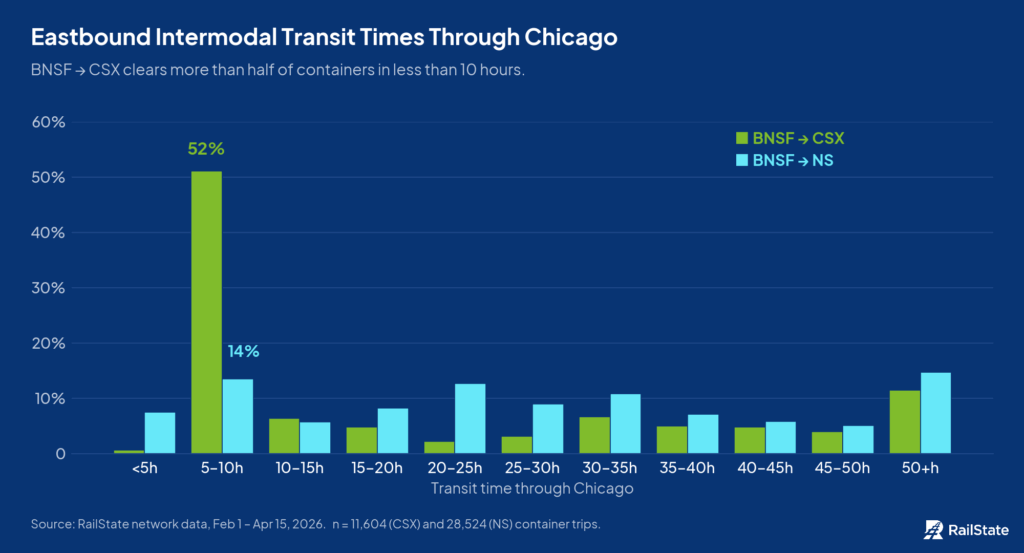
More than half of BNSF-to-CSX containers cross Chicago in less than 10 hours, RailState data shows.