
Maersk Moves to UP
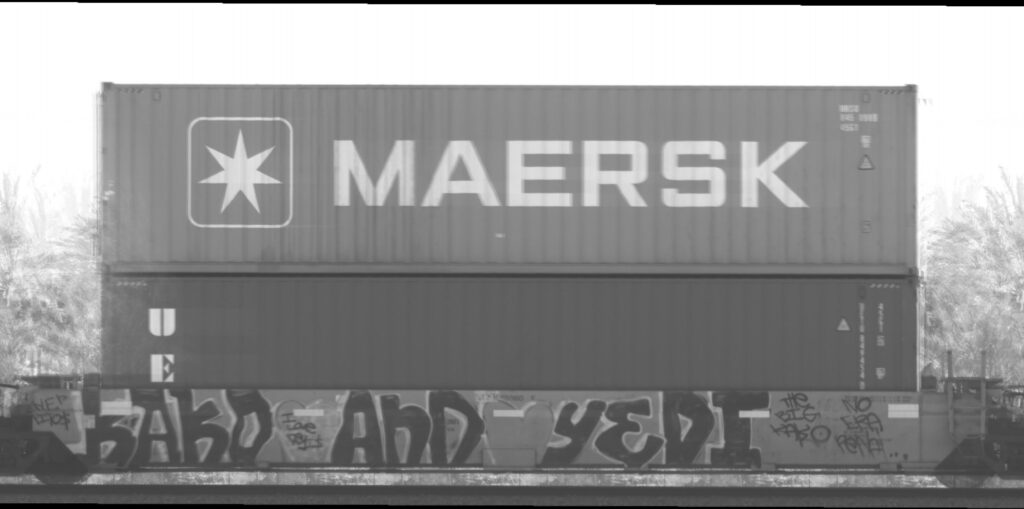
Maersk just moved most of its eastbound containers to UP from BNSF.
Maersk has rerouted most of its eastbound containers, and it happened fast. For the past year, almost every Maersk container leaving Southern California moved on BNSF’s Southern Transcon. Now, most of it rides UP.
In a recent report on rail travel times from Southern California to Chicago, we noted that Union Pacific’s volume was rising in recent weeks. That report did not say why. This Maersk shift is the main reason.
A change like this is hard to see from the outside. The volumes may turn up later in a quarterly report, but that can take months, and many shifts are never announced at all. The only way to catch one as it happens is to measure the network directly. RailState does that. We read the ID on every container that passes a sensor, so we can follow any container across the country, week by week. Over the full period we tracked, Maersk moved 100,559 TEU east on this lane. 90% of it moved BNSF.
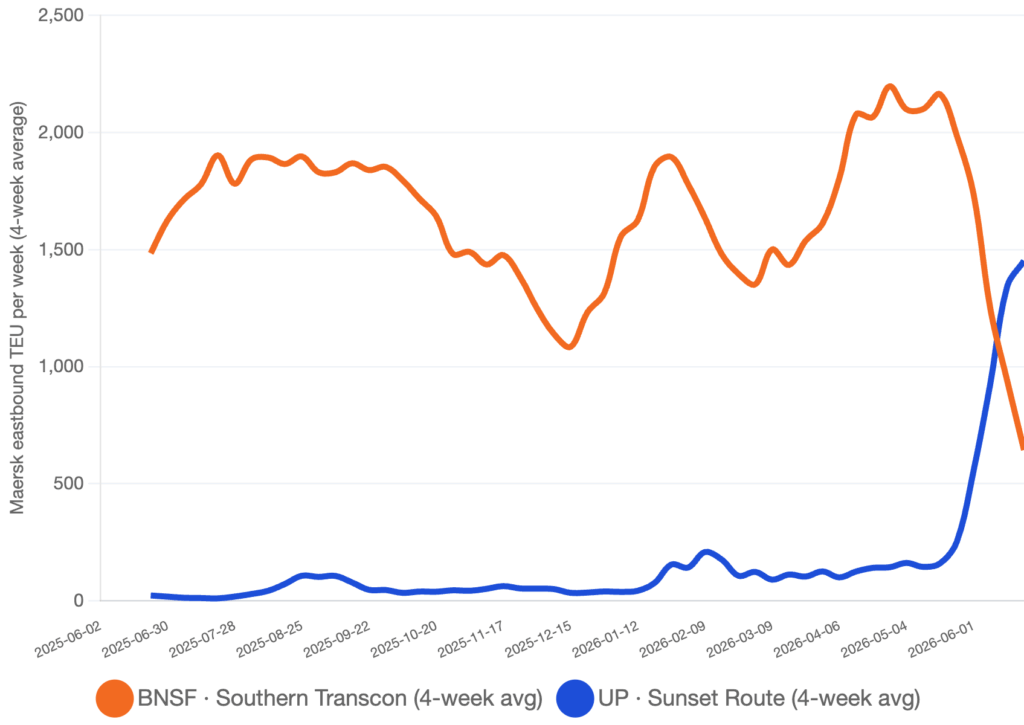
Through the middle of May, UP carried a single-digit percentage of Maersk’s eastbound containers on this lane. The week of June 1, UP’s share crossed 50% for the first time. By the week of June 8 it reached about 76%. Since the shift began in late May, UP has carried roughly 59% of the volume.
It is one UP route doing the work
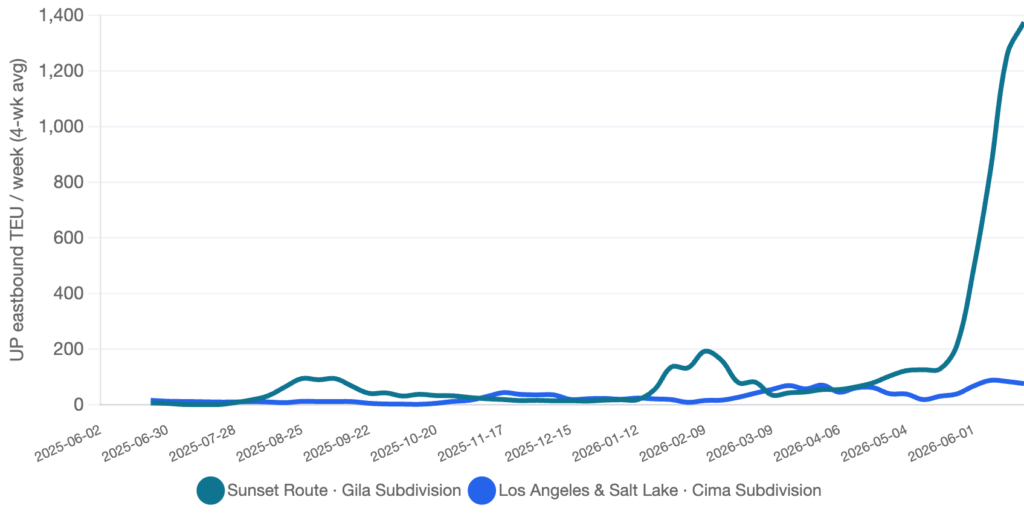
The shift is not spread evenly across Union Pacific. Almost all of the new UP volume is moving over the Sunset Route — the Gila Subdivision. UP’s parallel Los Angeles & Salt Lake route on the Cima Subdivision has stayed light throughout.
Why it matters
A change like this is the kind of thing that is hard to see while it is happening. It may surface eventually — in a railroad’s quarterly volumes, or in a shipper’s published schedule — but by then it is weeks or months old. Reading container marks at trackside turns a routing change into something visible the week it happens, on the specific route it happens on.
For the railroads, that’s competitive intelligence on how a major customer allocates its freight. For shippers and logistics providers, it’s an independent read on which corridor is actually moving the boxes. And it’s a single example of what a complete view of the network makes possible: every train, millions of measurements each day — so a shift like this one shows up as it forms, not long after the fact.
